This article contains affiliate links. If you buy through them, we may earn a commission at no extra cost to you. Learn more.
The Breakdown
Buffering, freezing, and channels that vanish are rarely the box’s fault. Here’s how to isolate the real cause and get a stable stream without spending on a replacement.
In Brief
- Most IPTV box failures come from the network, the app, or the subscription — not the hardware.
- Testing the same service on your phone is the fastest way to know where the fault lives.
- A wired Ethernet connection fixes more buffering than upgrading the box does.
- Before you buy a new iptv box, do a clean setup from scratch using one reputable player app.
- Why Your IPTV Box Keeps Failing
- The Three Most Common IPTV Box Mistakes
- Why the Usual Fixes Don’t Work
- What Experienced Users Do Differently
- Step-by-Step: How to Set Up Your IPTV Box Correctly
- Realistic Results After the Fix
- Pitfalls to Avoid With Any IPTV Box
- What Works vs. What Doesn’t
- Recommendation: When You Actually Need a New IPTV Box
- Frequently Asked Questions
If your iptv box starts buffering ten seconds into a match or drops channels for no reason, the immediate instinct is to blame the hardware. That instinct is usually wrong. The box itself is doing its job; the signal on the way to it is not. In almost every case, one of three things is broken: the network connection, the app you installed, or the subscription behind the stream. Fix those in the right order and you can avoid the cost and hassle of a new purchase.
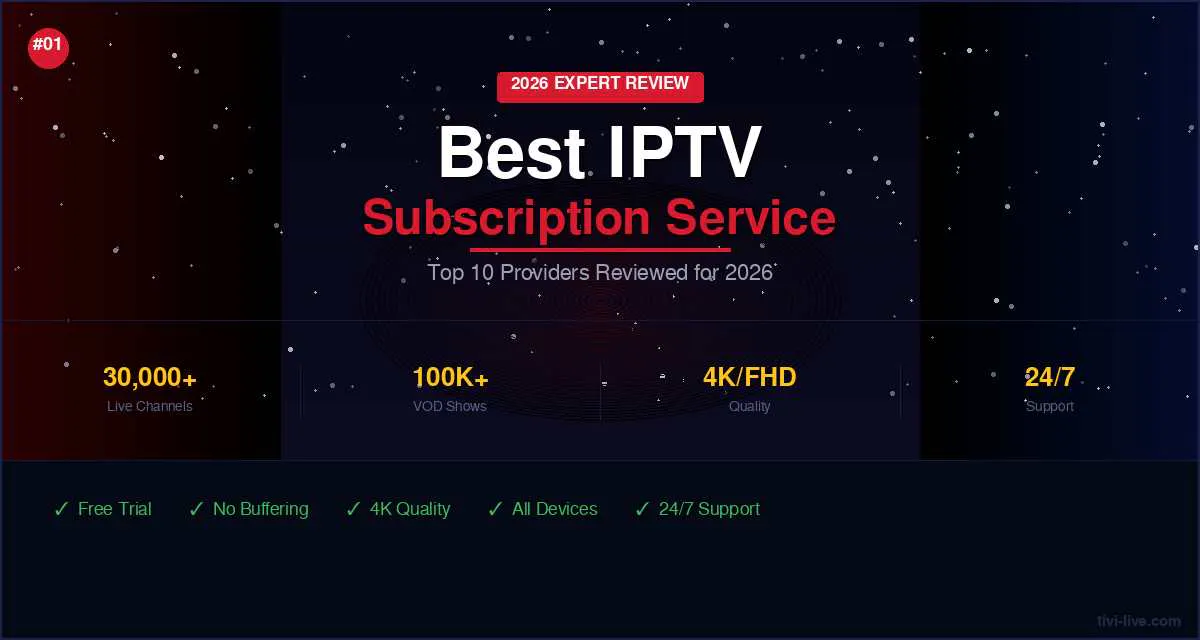
The home screen in the photo above looks benign enough — but the route from your router to that screen is where most IPTV problems actually live. Wi-Fi interference, a congested router, outdated firmware, or a provider with overloaded servers can all show up as the exact same symptom: a box that “just won’t work.”
Why Your IPTV Box Keeps Failing
The word “failure” usually covers three separate symptoms. Freezing mid-stream, channels that do not load, and random reboots have different root causes. A frozen picture is often a buffer problem. Channels that do not load may be an app-level error. Reboots are sometimes power related. Once you name the symptom, the fix gets easier.
An IPTV box is essentially a small Android computer. It receives an internet stream and displays it on a TV. If the internet stream arrives late or unevenly, the box cannot compensate forever. That is why the same box can work perfectly at one house and fail at another. The hardware rarely knows what changed — the network around it does.
The Three Most Common IPTV Box Mistakes
- Treating Wi-Fi as if it always works. IPTV is very sensitive to jitter. A Wi-Fi connection with a strong signal can still lose packets when neighbors or microwave ovens interfere. An Ethernet cable removes that variable in one minute.
- Sideloading random APK apps. Many boxes arrive with a browser and an “unknown sources” installation path. That convenience leads people to install old or modified apps. Those apps crash, log out, or deliver poor streams, and the box gets blamed.
- Choosing a subscription by price alone. The cheapest service rarely has enough bandwidth or server capacity. If the provider over-sells their streams, the box is not at fault. A good provider should let you use it on your phone as a test.
Why the Usual Fixes Don’t Work
Most people respond by restarting the box, clearing cache, or unplugging the router. Those actions are not wrong, but they treat the symptom. A restart clears the RAM and reconnects to the server; it cannot repair a Wi-Fi channel that is swamped. Clearing app data may remove login details and make things worse. Factory reset is a last resort — it erases settings you need and does not solve ISP throttling or an overloaded server.
Replacing the box will not fix a wiring problem, a Wi-Fi bottleneck, or a crashed app.
Replacing the box will not fix a wiring problem, a Wi-Fi bottleneck, or a crashed app.
What Experienced Users Do Differently
People who rarely deal with IPTV issues do not look at the box first. They look at the chain: internet cable, router, box, app, subscription. They test each link in that order. They also keep a simple rule: if a stream runs poorly on a phone next to the router, no box will fix it. If the stream runs well on the phone but not on the box, the box or its app is the problem.
Experienced users also choose one good player app and stick to it. They do not install every “IPTV-only” app that appears in a Google search. They use the provider’s recommended app or a well-known player that supports M3U playlists and Xtream Codes, and they update it only when the update notes show a clear fix.
Finally, they connect the box with Ethernet when possible. This single choice removes Wi-Fi interference, DNS delays, and packet loss that are invisible on a speed test.
Step-by-Step: How to Set Up Your IPTV Box Correctly
- Write down the actual symptom. Is it buffering, a crash, a black screen, or no sound? A short note helps you know whether the fix works.
- Test the subscription on your phone or laptop while connected to the same Wi-Fi. Use the same provider app, or open the M3U playlist URL in VLC if you have it.
- If it is also bad on the phone, switch the phone to mobile data and test again. If the stream comes alive on mobile data, the problem is your home network or your ISP.
- Move the box next to the router and connect it with Ethernet. Use the supplied cable or any quality CAT5e/CAT6 cable. This eliminates Wi-Fi from the equation.
- Open the box’s system settings and check for software updates. Then update the IPTV app from the provider or official store. Avoid APK files from forums.
- Set video output to the native resolution of your TV (1080p or 4K) and disable any “auto frame rate” or “smooth motion” options if the picture judders.
- Configure the app with the exact server URL, username, and password from the provider. Do not type them from memory if the provider sent a welcome email.
- Run the same channel you were watching before. Give it two minutes. If it still buffers, try the same channel on the phone over mobile data.
The Ethernet cable in the photo above is not decoration; it is the single most reliable fix for buffering. If you cannot run a cable to the box, at least move it closer to the router or use a mesh system with a wired satellite. Even so, the cable remains the benchmark that every other fix is measured against.
Realistic Results After the Fix
Once the box is wired and the app is clean, you can expect the box to behave like a normal streaming device. That means no buffering on channels your provider can actually deliver. It does not mean every channel will be perfect. Live sports channels are the worst case because they need high, steady bitrates. If your provider’s servers are full on a match day, no local change will save you.
Similarly, 4K IPTV streams require both a 4K box and a broadband connection that holds 25 Mbps or more while other devices are online. A 4K box alone is not enough. For live sports specifically, the priority should be a provider with low congestion and a box with hardware decoding for modern codecs.
Pitfalls to Avoid With Any IPTV Box
- Lifetime subscriptions sold through social media. If the price looks too good, the service often disappears within months. Credible providers offer monthly or no-contract plans and can show you a test line first.
- Cheap USB power adapters. If your box reboots randomly, swap the power adapter before blaming firmware. A 5V/2A adapter that sags under load will cause reboots.
- HDMI splitters and long HDMI cables. Signal integrity matters less here, but a bad splitter can cause black screens and intermittent handshake problems.
- Running a VPN for every channel. If your provider doesn’t require a VPN, leave it off. Extra encryption can add processing time and cause buffering.
- Using an old version of an IPTV app because you liked its layout. Outdated apps often lack the codec support needed for newer streams.
What Works vs. What Doesn’t
This comparison table sums up the difference between the fixes that hold up and the ones that only keep you busy.
| Problem | What Works | What Doesn’t |
|---|---|---|
| Buffering every few minutes | Ethernet connection; test on phone; check provider server status | Clearing cache and repeatedly restarting the box |
| Channels do not load | Update the app; re-enter credentials; test the playlist URL in VLC | Factory reset before checking login details |
| Judder on 4K streams | Match output to the TV; use Ethernet; check broadband speed | Disabling 4K as a permanent workaround |
| Random reboots | Replace the power adapter; improve ventilation | Installing a “lighter” version of the same app |
The same logic applies if you are deciding whether to replace the box itself. Newer hardware can help, but only after the other causes have been ruled out.
| Pros of Replacing Your IPTV Box | Cons of Replacing Your IPTV Box |
|---|---|
| Newer Wi-Fi standards and faster processors | Cost and setup time |
| Better codec support for 4K streams | Doesn’t fix ISP or subscription issues |
| More storage for several apps and larger buffers | Some cheap boxes ship with limited support and old firmware |
The refresh rate and decoding options shown in the image above are usually buried in settings. Adjusting them correctly can make 50Hz sports channels smoother on TVs that expect 60Hz. If you notice judder mostly during camera pans, those settings are worth checking before you assume the box is weak.
Where to Buy
Compare package options and check what the current offer includes before you decide.
Recommendation: When You Actually Need a New IPTV Box
Only after you have done a clean setup and tested the same subscription on another device should you start shopping. If the box still freezes after those steps, the hardware genuinely may be too old. A current-generation IPTV box with 4K output, dual-band Wi-Fi, and enough storage for two or three apps will make a visible difference.
For live sports, look for hardware that supports HEVC and VP9 codecs in hardware, not software. The main offer page on buyiptv3.com lists the current specs and package options. At that point, buying a new box is a reasonable fix — not a hope.
The Bottom Line
If your current IPTV box freezes or loses channels, start with the network and app, not a new purchase. Only buy a replacement when the same subscription runs cleanly on another device and your current box still fails after a fresh setup.
Main OfferThis link goes to the seller’s official checkout. If you purchase through it, we may earn a commission at no additional cost to you. Our assessment is written independently of that arrangement.
Frequently Asked Questions
Why does my iptv box keep buffering?
Buffering usually means the stream is arriving unevenly. Check whether the same channel runs smoothly on your phone over mobile data. If it does, the fault is in your Wi-Fi router or broadband. A wired connection between the box and router normally stops it. If the phone also buffers, contact your IPTV provider, not the box manufacturer.
How do I set up an IPTV box on Wi-Fi?
Connect the box to your 5GHz Wi-Fi network, not 2.4GHz, and keep it close to the router. Use your provider’s app or a reputable player that supports M3U playlists. Enter the login details exactly, then test a channel for two minutes. If it is still unstable, try Ethernet, because Wi-Fi is the most common bottleneck.
Is it worth buying a cheap iptv box with wifi?
A cheap IPTV box can be worth it if the chipset is recent and the RAM is at least 2GB. Older no-name boxes struggle with 4K and modern codecs. You also need to confirm the seller provides firmware updates. The price is tempting, but a cheap box that no longer gets updates can become useless with newer apps.
What is the best iptv box for live sports?
There is no single best box, but live sports demand a box that can handle smooth 60fps playback and hardware decoding for common codecs such as HEVC. A fast Ethernet port or reliable Wi-Fi on 5GHz is essential. More importantly, choose an IPTV provider with enough bandwidth on match days. The box cannot compensate for a saturated server.
How can I watch IPTV on multiple TVs in my house?
The simplest approach is one IPTV box per TV, each using the same subscription login if your provider allows it. Some providers limit simultaneous connections, so verify that before setting up extra rooms. Avoid trying to split one HDMI output across multiple TVs; it will not work reliably with different sources. If you have Firesticks or smart TVs, you may use the provider’s app on those instead of buying another box.
What is the difference between an IPTV box and a Firestick?
A Firestick runs Amazon’s Fire OS and is designed around Amazon services, whereas a dedicated IPTV box is usually an Android-based device with more USB ports, better cooling, and sometimes a more flexible interface. For IPTV, both can run the same apps, but a good IPTV box offers stronger hardware video decoding and easier sideloading. A Firestick is fine for light use; a dedicated box is better if you watch long sessions in 4K.
How do I know if my IPTV subscription is the problem?
Test the same subscription on another device outside your home network, such as a phone using mobile data. If it is still slow or buffering, the provider is the weak link. If it is fine, your box or network is the problem. A clear provider also gives you a test line or trial stream before you pay. If customer support is unreachable, treat that as a warning sign.
Can a 4K IPTV box really improve picture quality?
A 4K box can improve picture quality only when all parts of the chain support 4K: the channel’s source, the subscription, your broadband speed, and your TV. It will not make a 720p stream into real 4K. On a 4K TV, a 4K box can reduce the TV’s upscaling workload, which may help. Check the TV’s native refresh rate and the box’s output settings if you see judder.
Disclosure: Some links in this article are affiliate links, meaning we may earn a commission if you make a purchase — at no additional cost to you. This does not influence our editorial assessment, which is based on publicly available information about the product.