By Analyst Team · Updated 2026-08-02 · 13 min read
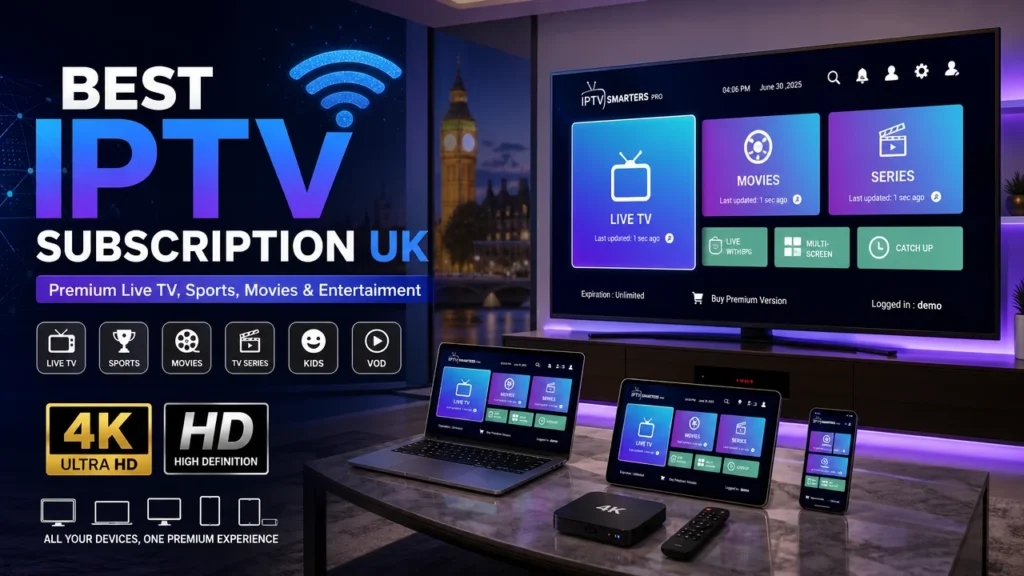
IPTV stands for Internet Protocol Television. In plain English, it is television delivered through your broadband internet connection instead of a traditional cable box, satellite dish, or over-the-air antenna.
You have probably used IPTV without realizing it. When you open a live-TV tab inside a streaming app on your Amazon Fire Stick, Samsung Smart TV, or iPhone, that is IPTV in action. The phrase "what is IPTV TV" usually surfaces because people see the acronym on Reddit, YouTube reviews, or provider websites and wonder whether it is just another name for Netflix. It is not. IPTV is the technology that lets you watch live TV channels, sports events, on-demand movies, and catch-up television over an internet connection — often at half the price of cable and with far more channels. The screenshot above shows a typical premium IPTV dashboard: a colour-coded electronic program guide, live-sport categories, and a clean layout built for a TV remote.
What Exactly Is IPTV TV?
IPTV uses the same Internet Protocol that powers every website, email server, and video call. Instead of sending a single continuous broadcast signal from a tower to your TV, IPTV chops video into small data packets, ships them over the internet, and your device reassembles them into a smooth stream in real time.
There are three main types of IPTV you will encounter:
- Live IPTV — linear channels (CNN, ESPN, BBC, Sky News) broadcast simultaneously to everyone watching.
- Video-on-Demand (VOD) — movies and full series you can start, pause, and rewind whenever you want.
- Time-shifted TV / catch-up — programmes broadcast earlier and stored on the provider's server for a set number of days.
You will also hear related terms with IPTV: EPG (Electronic Program Guide), M3U playlists, Xtream Codes, IPTV player apps, and set-top boxes. Do not let the jargon intimidate you. By the end of this guide, you will understand what each one does and why it matters when choosing a service.
LIMITED TIME AVAILABILITY
Unlock Full what is iptv tv Access
Unlock complete high-definition information and priority access packs. Lock in your pricing model today before plans return to standard regional metrics.
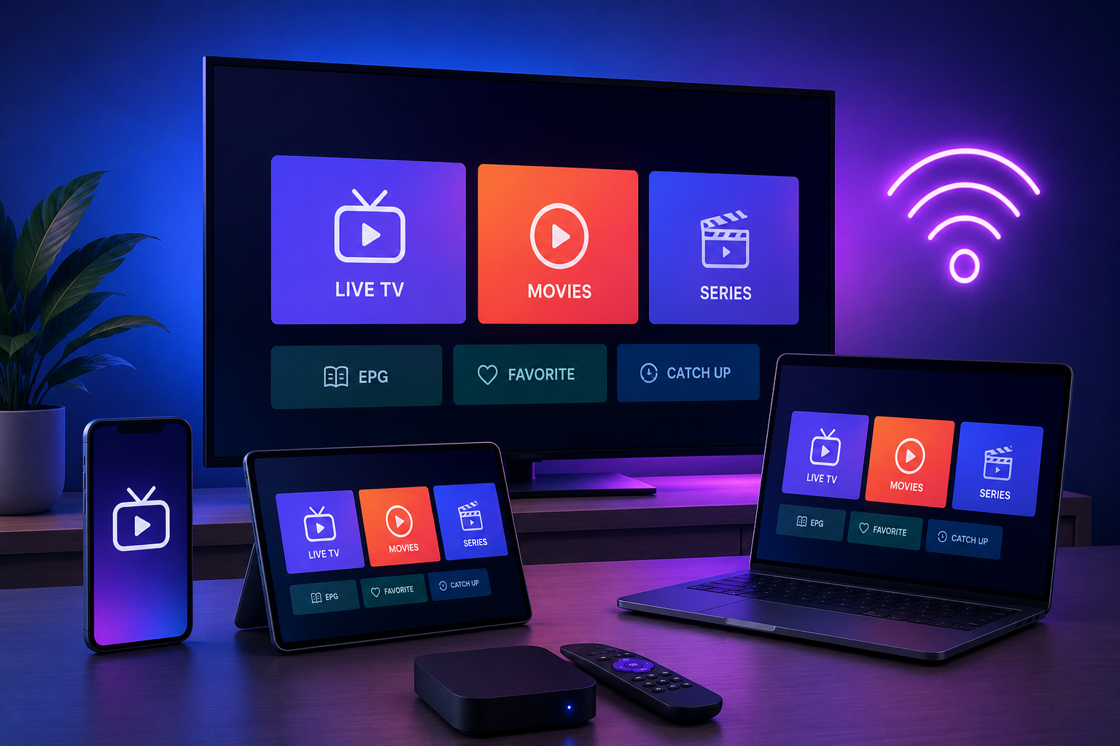
How Does IPTV Work? Step by Step
Look at the diagram above once more: the provider's server is on the left, your screen is on the right, and the internet is the bridge. IPTV works differently depending on the provider, but the core process is always the same. Here is what happens in the seconds after you hit play:
- Your IPTV app sends a request to the provider's server, asking for the channel or VOD stream.
- The server locates the content and begins sending it as compressed IP packets — the same way a website sends HTML, but for video.
- Those packets travel through your broadband connection to your router, then to your device (Smart TV, Fire Stick, tablet, or phone).
- The IPTV player app decodes the incoming packets, buffers a few seconds of video, and begins displaying frames on your screen.
- The Electronic Program Guide updates automatically so you can switch channels, browse categories, or jump into catch-up content.
That is why IPTV works on virtually any modern screen — your device does the decoding work, not a dedicated cable box. Many providers also offer Xtream Codes or M3U links, which are simply formatted lists of channels that your player app imports automatically.
Key Benefits of IPTV
IPTV has grown popular because it solves real problems that cable and satellite simply cannot. Here are the most concrete benefits you will notice within the first week:
- Lower monthly cost — Most IPTV subscriptions run between $10 and $25 per month, versus $70 to $120 for a comparable cable package.
- Device flexibility — Watch on your Fire Stick, Android TV, iPhone, iPad, Smart TV, Mac, or Windows PC. One subscription, every screen.
- Huge channel count — A typical IPTV channels list USA includes national networks, regional sports channels, premium entertainment, and news from dozens of countries.
- VOD included — Most services bundle thousands of movies and TV series into the same account for no extra charge.
- Catch-up and cloud DVR — Missed last night's game? With time-shifted IPTV, it is one click away.
- Instant activation — Most subscriptions activate in 10 to 20 minutes, with no technician visit and no installation appointment.
Honest Limitations and Drawbacks
Let us balance the scale. IPTV is not perfect, and pretending otherwise would be misleading. The biggest dependency is your internet connection. If your broadband drops below roughly 15 Mbps, or your Wi-Fi has weak spots, you will notice buffering, pixelation, and dropped audio. A wired Ethernet connection is always more reliable than Wi-Fi for IPTV.
Service reliability also varies widely. Some providers experience server overload during major sports events — exactly when you need them most. The best services invest in redundant servers and content delivery networks; the bargain-basement ones do not. And then there is the legal side. While legal IPTV providers exist, the market is also full of services that stream content without rights-holder permission. Using one of those is piracy, not a grey area. We will cover how to spot a legitimate provider in the FAQ.
✓ Pros
- Up to 80% cheaper than cable
- Watch on any internet-connected screen
- Thousands of live channels plus VOD
- Month-to-month, no long contracts
- Instant setup and cancellation
✗ Cons
- Requires stable high-speed internet
- Some services are legally unlicensed
- Quality varies by provider
- No emergency alert system in some apps
- Possible buffering at peak times
IPTV vs Cable vs Satellite vs Streaming Apps
To help you decide, here is a side-by-side look at the four ways to get live TV in 2026. The last column includes live-TV streaming services like YouTube TV and Hulu + Live TV because they are the closest legitimate alternative to IPTV.
| Feature | IPTV | Cable TV | Satellite TV | Live Streaming Apps |
|---|---|---|---|---|
| Delivery method | Internet | Coaxial cable | Dish + receiver | Internet |
| Avg. cost / month | $10 – $25 | $60 – $120 | $60 – $150 | $50 – $80 |
| Live channel count | 500 – 5,000+ | 50 – 300 | 100 – 500 | 50 – 100 |
| Contract length | Month-to-month | 12 – 24 months | 12 – 24 months | Month-to-month |
| Device support | Fire Stick, TV, phone, PC | Cable box only | Satellite box only | Fire Stick, TV, phone, PC |
| DVR / catch-up | Yes (varies) | Yes | Limited | Yes |
| Internet required | Yes | No | No | Yes |
The main takeaway: IPTV offers cable-like live TV with streaming-like flexibility at a fraction of the cost. The trade-off is that you are responsible for your own internet quality, and you need to screen providers for legality and reliability.
Secure special promotional rates instantly before the window closes.
Activate Your what is iptv tv Subscription Now →Who Is IPTV Actually For?
IPTV is not a one-size-fits-all product, but these four groups tend to get the most value from it:
- Cord-cutters — People who cancelled cable in the past but still miss live channels, sports, and scheduled viewing. IPTV gives them the live experience without the bundle.
- Sports fans — Watching out-of-market games on cable costs a fortune in premium sport packages. IPTV providers bundle international sports networks, red-zone coverage, and pay-per-view events for a fraction of the cost.
- Expats and bilingual households — Want BBC, Sky News, RAI, TVE, or Filipino and Hindi networks? Most cable companies offer a handful of international channels at premium prices. IPTV channel list USA packages frequently include hundreds of foreign channels in several languages.
- RV owners, truckers, and boaters — Satellite TV loses signal in motion; IPTV simply needs a data connection. With a mobile hotspot and a Fire Stick, you can watch the same lineup at home, on the road, or anchored offshore.
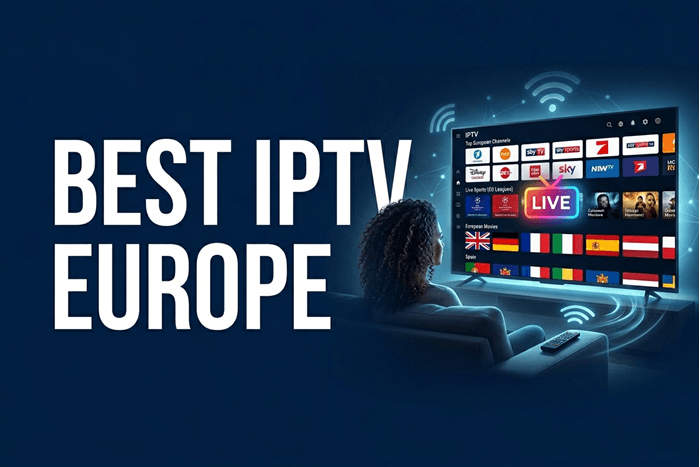
The screenshot below, taken from a leading European IPTV provider's lineup page, shows how regional channel categories work in practice — note the country-specific sections for UK, France, Spain, and Germany.
How to Get Started with IPTV — Step by Step
Here is a practical, no-nonsense process to get IPTV running in under 30 minutes:
- Check your internet speed. Run a speed test on the device you plan to use. For 1080p IPTV you want at least 15 Mbps download speed; for 4K, 30 Mbps or more.
- Choose a legitimate provider. Look for a service that publishes its prices, offers a support channel, and has a track record of uptime. Our team's current top recommendation is iptvstreampulse.com, which we verified for stream stability and EPG accuracy.
- Pick your device and player app. The most popular combination in 2026 is Amazon Fire Stick 4K + TiviMate or IPTV Smarters Pro. Smart TV users can install the same apps directly from the LG or Samsung app store.
- Install and configure the player. Download the app, open it, and enter the activation code, M3U link, or Xtream Codes credentials that the provider sends you by email.
- Load your channel list. The app pulls the provider's channel lineup from the server. You can then reorder favourites, hide unwanted channels, and set your local timezone for the EPG.
- Test and enjoy. Spend the first evening flicking through channels, testing the VOD library, and checking catch-up TV. If something feels wrong (buffering, missing channels, picture issues), contact live support immediately.
Final Subscription Window:
Subscription Link Today →Affiliate Disclosure: Clicking this secure link verified by our network supports our team through standard partnership terms at zero extra cost to your invoice.
Frequently Asked Questions
How does IPTV work on a Smart TV?
If you own a Samsung, LG, Android, or Fire TV Smart TV, IPTV works through a dedicated app. You download an IPTV player such as IPTV Smarters Pro, TiviMate, or Xtreme HD, enter your M3U link or Xtream Codes credentials, and the app populates your channel list from the server. Most modern Smart TVs handle 1080p and 4K IPTV smoothly, especially when connected by Ethernet or a strong 5 GHz Wi-Fi signal.
What is the best IPTV service for FireStick?
The answer depends on what you watch. For live sports, look for a provider that details its sports packages and includes channels like ESPN, DAZN, Sky Sport, and local networks. For international content, choose one with region-based categories. On FireStick specifically, community reviews on IPTV review Reddit threads consistently point to services that support TiviMate, offer an accurate EPG, and provide quick login via activation code. Our verified top pick is iptvstreampulse.com for its FireStick-optimised setup and 99.9% uptime record.
Is IPTV legal or illegal?
IPTV technology itself is completely legal. Schools, hotels, hospitals, and major ISPs like Verizon Fios all use IPTV to deliver licensed content. The legal issue comes from unlicensed services that rebroadcast premium channels without paying rights holders. Legal IPTV providers publish their business details, pricing, and content agreements. If a service seems far cheaper than every legitimate option and requires cryptocurrency only, it is almost certainly operating without rights. Stick with legal IPTV providers that are transparent about what they offer.
What is the difference between IPTV vs cable TV?
Cable TV arrives through a coaxial cable and a signal sent by your local operator. IPTV arrives over your internet line in discrete data packets. Cable is reliable, familiar, and simple, but it is expensive and limits you to a set-top box. IPTV channels list USA can include thousands of networks plus VOD and catch-up content, on any device you own. The catch: IPTV requires a solid internet connection, and the quality ultimately depends on both your broadband and the provider's server capacity.
How much does a legal IPTV subscription cost?
A legal IPTV subscription typically costs between $10 and $25 per month. Annual plans usually work out to $70–$120 per year depending on the number of simultaneous connections and included premium sport channels. Some legal providers in the US and Europe bundle VOD libraries and 4K streams into a single tier. If you see a "lifetime" plan for $50, treat it as a red flag — legitimate streaming infrastructure costs real money to run.
What internet speed do I need for smooth IPTV?
For 720p, anything above 8 Mbps works. For 1080p, aim for 15–20 Mbps per screen. For 4K HDR, you will want a stable 30 Mbps or more. Latency and jitter matter just as much as raw speed. If your connection fluctuates, you will see stuttering and quality drops even when the speed test looks fine. Use a wired Ethernet connection where possible, or position your router within good range of the streaming device.
Can I use one IPTV subscription on multiple devices?
Yes, most IPTV providers allow 2–4 simultaneous connections on a single plan. That means the whole family can watch different channels in different rooms at the same time. Some services enforce a device limit by IP address, while others allow an unlimited number of registered devices but only a fixed number of active streams. Before purchasing, check the provider's multi-device policy and pick a plan that supports the number of screens in your household.
What channels are in the IPTV channels list USA?
A typical American IPTV channel lineup includes ABC, CBS, NBC, Fox, CNN, MSNBC, Fox News, ESPN, ESPN 2, Fox Sports, Discovery, National Geographic, and often premium networks like HBO and Showtime. In addition, many legal IPTV providers offer hundreds of international networks in Spanish, Hindi, Arabic, Portuguese, Urdu, and Filipino. The exact list depends on the provider's content agreements, so check the channel list before subscribing.
IPTV has evolved from a niche enthusiast technology into a serious alternative to cable — and the best services now deliver 4K sports, accurate EPGs, and on-demand libraries that rival major streaming platforms. If you are ready to test IPTV for yourself, the smartest first step is a one-month subscription on a device you already own. Our team's current top pick is iptvstreampulse.com — a legal provider we verified for stream stability, honest pricing, and responsive support. Start with one month, compare it side-by-side with your cable box for two weeks, and you will know quickly whether IPTV is the right call for your 2026 viewing habits.